Best Tiefling Names for D&D
A great Tiefling Name should feel like more than a collection of dramatic letters. It should hint at who your character is, where they came from, and what they want to become.
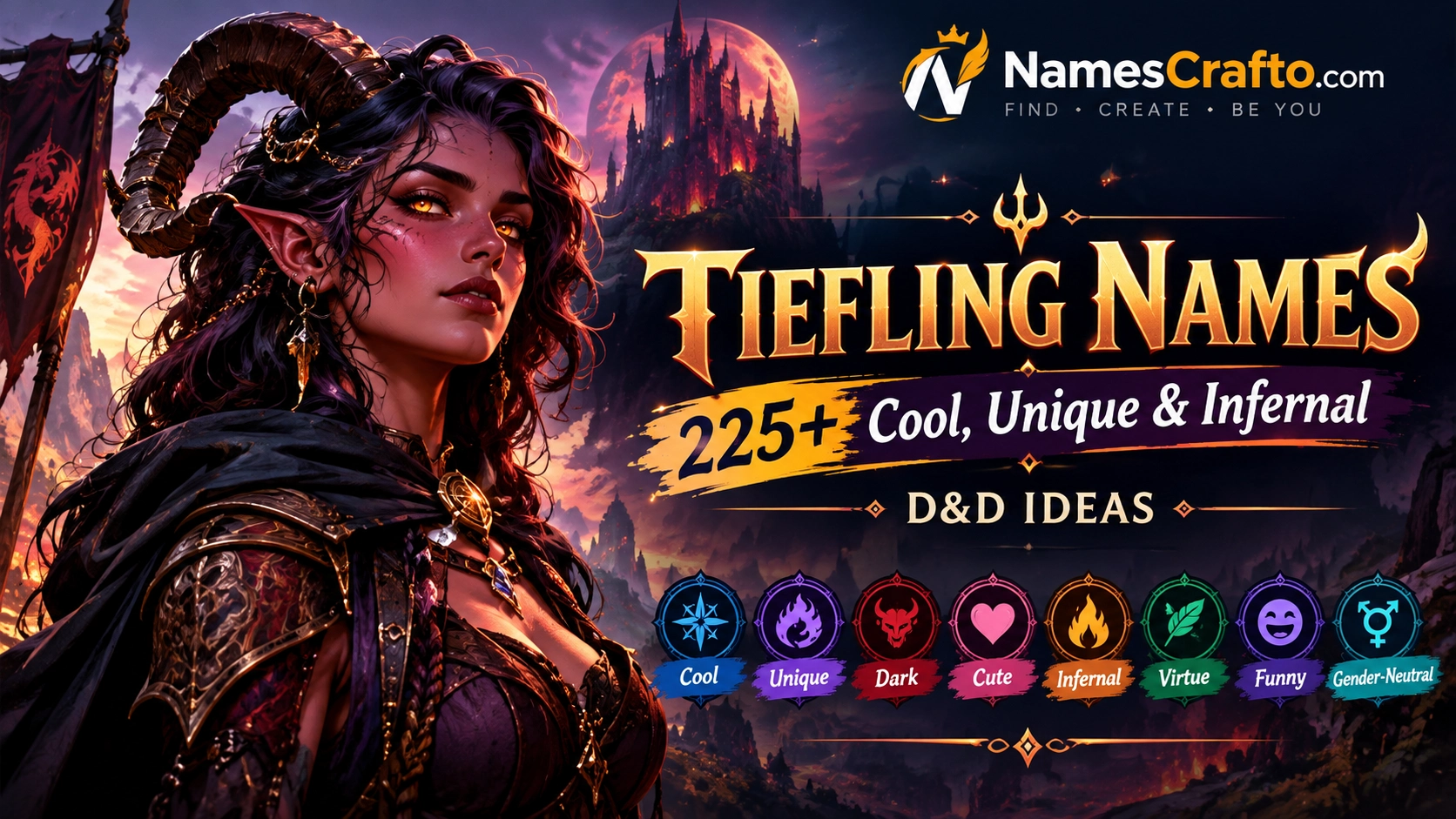
Whether you’re building a D&D warlock, rogue, sorcerer, paladin, bard, villain, NPC, or a Baldur’s Gate 3 character, this guide gives you 225 original Tiefling name ideas organized by personality, style, and character concept.
The names below are creative inspirations rather than claims of official D&D canon. Classic D&D Tiefling naming traditions include cultural names, Infernal-style names, and Virtue or concept names, while modern Tiefling rules also give players Abyssal, Chthonic, and Infernal Fiendish Legacies.
Best Tiefling Names
If you want one memorable name without spending an hour scrolling through hundreds of random options, start here.
These names are designed to work across different Tiefling personalities, classes, and campaign settings.
- Vaelric
- Zarevyn
- Nyxara
- Kaelveth
- Veyrith
- Azrienne
- Morvex
- Selvara
- Zareth
- Khaelis
- Vireth
- Ravaryn
- Malvera
- Xyrel
- Draevyn
Best for: general D&D characters, NPCs, original fantasy characters, and players who want a dramatic but flexible identity.
A useful trick is to choose the name that matches your character’s personality, not simply their horns, tail, or fiendish ancestry.
Male Tiefling Names
Male Tiefling names often work well when they combine strong consonants with unusual fantasy syllables.
- Vaelkor
- Zariketh
- Morthaven
- Khaedros
- Varkelis
- Azraven
- Draveth
- Korvian
- Malzarek
- Xavreth
- Veykor
- Rhaedric
- Zorveth
- Kaelzor
- Morvain
These names suit warriors, warlocks, rogues, sorcerers, merchants, nobles, and wandering adventurers.
For a more lore-conscious character, remember that a Tiefling does not have to use a stereotypically Infernal name. Their name can reflect the culture where they were raised.
Female Tiefling Names
For a female Tiefling, you can emphasize elegance, mystery, power, or an almost ethereal quality.
- Vaelira
- Zarelia
- Nyverra
- Azmira
- Seravyn
- Kalythra
- Virelia
- Malysra
- Xavira
- Velmara
- Rhaevira
- Zelmira
- Nyrissa
- Kaelira
- Vessara
These names work especially well for sorcerers, bards, warlocks, nobles, assassins, and mysterious travelers.
A softer name can also create an interesting contrast with an intimidating appearance.
Gender-Neutral Tiefling Names
Tiefling identity does not require a name to follow a strict masculine or feminine pattern.
Short, concept-driven names are particularly useful for characters who chose their own identity.
- Ember
- Vex
- Ashen
- Vale
- Sable
- Riven
- Echo
- Onyx
- Wren
- Solace
- Tempest
- Haven
- Dusk
- Raven
- Thorn
These are excellent choices for rogues, bards, wanderers, mysterious NPCs, and characters who deliberately reject the expectations surrounding their heritage.
Cool Tiefling Names
A cool Tiefling name should be easy to pronounce, memorable at the gaming table, and distinctive without becoming difficult to spell.
- Zayvex
- Vaelor
- Nyxen
- Kaevor
- Veylan
- Azrix
- Zorren
- Ravex
- Xylar
- Velrix
- Kairen
- Morzen
- Vexara
- Zhaelor
- Draxel
These names are especially useful when you want a character who feels stylish, confident, mysterious, or charismatic.
Quick test: say the name aloud three times. If your party can remember it after one introduction, you’ve probably found a strong option.
Badass Tiefling Names
Some characters need a name that enters the room before they do.
These names are built for intimidating warriors, bounty hunters, antiheroes, villains, and fearless adventurers.
- Hellscar
- Ashbane
- Grimthorn
- Bloodveil
- Ironshade
- Dreadmark
- Flamebane
- Soulbrand
- Warveil
- Blackscar
- Emberfang
- Grimbrand
- Nightreaver
- Doomscar
- Thornwrath
These are better treated as original fantasy names, nicknames, epithets, or titles rather than official D&D names.
For an even stronger character concept, combine a personal name with an earned epithet.
For example:
Vaelric, the Ashbound
That immediately gives the character a story hook.
Dark Tiefling Names
The Dark names are ideal for characters connected to tragedy, forbidden magic, revenge, death, shadows, or morally complicated stories.
- Noctyra
- Morvessa
- Dreaden
- Vantress
- Nyxveil
- Sorrow
- Omen
- Ruin
- Wraith
- Hollow
- Malice
- Grievance
- Forsaken
- Torment
- Vengeance
Dark doesn’t automatically mean evil.
A Tiefling named Sorrow might be a compassionate healer carrying survivor’s guilt. A Tiefling named Vengeance might be a heroic paladin hunting the person who destroyed their family.
The meaning becomes much stronger when the backstory explains why the character chose it.
Cute Tiefling Names
A cute Tiefling name can be surprisingly memorable because it contrasts with the traditional image of a frightening fiendish character.
- Luma
- Nemi
- Mimi
- Riri
- Tali
- Vivi
- Kiki
- Zuzu
- Miri
- Lulu
- Nixie
- Sera
- Runa
- Pippa
- Lili
These names fit cheerful bards, mischievous rogues, optimistic sorcerers, young adventurers, and characters who reject the intimidating stereotype associated with Tieflings.
A cute name can also make a serious character more memorable.
Imagine a terrifying Tiefling barbarian named Lulu.
That contrast is the joke.
Unique Tiefling Names
If your priority is originality, avoid simply combining the same fantasy sounds repeatedly.
Instead, look for names with an unusual rhythm that still feels easy to pronounce.
- Vaezryn
- Zyraveth
- Khaevira
- Maelzun
- Vezraya
- Xalverin
- Rhaezik
- Zelmorith
- Kaevryn
- Valthessa
- Azryvek
- Morzaira
- Xyvereth
- Draezora
- Velzaryn
These names are particularly useful for players who have already seen the usual fantasy-name patterns and want something less predictable.
Uniqueness rule: a name does not need to be complicated to be original.
A short name such as Vex can be more memorable than a 12-letter fantasy construction.
Infernal Tiefling Names
Infernal-inspired names often benefit from hard consonants, dramatic syllables, and a slightly unfamiliar rhythm.
- Azkarith
- Varketh
- Malzakar
- Khaerok
- Zervak
- Morthak
- Velkran
- Drazek
- Azvorn
- Korveth
- Varkun
- Zalmek
- Kharzen
- Malvek
- Vezrak
These are original Infernal-inspired creations, not official names from the D&D rulebooks.
If you want an authentic-feeling result, don’t simply add “hell,” “blood,” or “dark” to every name. Instead, create a sound pattern that feels culturally consistent.
Hard K, V, Z, X, R, D, and M sounds can help create that dramatic fantasy effect.
Tiefling Virtue Names
Virtue Names are one of the most distinctive ideas associated with classic Tiefling naming.
Instead of using a conventional personal name, a character can choose a word representing an ideal, emotion, aspiration, or concept.
- Defiance
- Redemption
- Resolve
- Mercy
- Courage
- Freedom
- Patience
- Justice
- Triumph
- Destiny
- Wisdom
- Loyalty
- Rebellion
- Grace
- Ambition
Virtue names become much more powerful when they are ironic.
A Tiefling named Mercy who refuses to kill anyone tells one story.
A Tiefling named Mercy who is famous for never forgiving an enemy tells another.
That tension is one of the best ways to make a simple one-word name feel like a character.
- Explore More: https://namescrafto.com/horse-names/
Funny Tiefling Names
Not every campaign needs another terrifying character named Bloodsomething.
Funny Tiefling names work especially well in casual campaigns, comedy-focused parties, NPCs, tavern characters, and characters intentionally designed to break fantasy stereotypes.
- Sir Horns-a-Lot
- Tailor Swift
- Hellbert
- Horn Solo
- Flameo
- Baaalrog
- Hot Stuff
- Ash Ketchum
- Devilishly Good
- Horny Bard
- Toast Malone
- Inferno Alfredo
- Lil’ Menace
- Satan’s Intern
- Emberly Average
These are deliberately humorous rather than lore-serious.
If your Dungeon Master runs a dramatic campaign, consider using a funny nickname while keeping a serious formal name.
For example:
Vaelkor “Toast” Veyr
Now the joke becomes part of the character rather than replacing the character.
Tiefling Names by Fiendish Legacy
Modern D&D gives Tieflings three Fiendish Legacy options: Abyssal, Chthonic, and Infernal.
That creates a useful modern naming framework.
Abyssal-inspired names
Abyssal characters can inspire chaotic, wild, feral, or unpredictable naming styles.
- Zharvek
- Rauketh
- Vezgor
- Xarnak
- Krezul
Chthonic-inspired names
Chthonic-inspired characters can lean toward mysterious, shadowy, elegant, eerie, or death-associated sounds.
- Morveth
- Nyzara
- Chalis
- Erevyn
- Zelmor
Infernal-inspired names
Infernal-inspired characters can favor disciplined, sharp, commanding, or aristocratic sounds.
- Vaelkor
- Azravan
- Kharvek
- Zorakel
- Malveris
These are creative naming inspirations, not official names assigned to each Fiendish Legacy.
The important modern lore point is that a Tiefling’s fiendish connection does not dictate their morality. A Tiefling can be heroic, selfish, compassionate, rebellious, lawful, chaotic, or anything else.
Tiefling Names for D&D Classes
Your class can provide an excellent shortcut when you’re stuck between several names.
Warlock
- Vaelrix
- Omen
- Zareth
- Morvex
- Nyxara
Sorcerer
- Seravelle
- Vaelira
- Zarelia
- Vessara
- Xyrissa
Rogue
- Vex
- Shade
- Riven
- Sable
- Ash
A warlock name might sound mysterious and arcane, while a rogue benefits from something short and sharp.
For a paladin, bard, cleric, or barbarian, consider choosing the name based on the character’s personal philosophy rather than the class itself.
Tiefling Names for Baldur’s Gate 3
If you’re naming a Tiefling for Baldur’s Gate 3, you have even more freedom because the game encourages players to build characters with distinct personalities and stories.
A good BG3-inspired name should be:
- Easy to remember.
- Easy to pronounce.
- Distinctive beside party members.
- Appropriate to the character’s personality.
- Flexible enough to fit your chosen backstory.
Try these:
- Vaelric
- Nyxara
- Zareth
- Veyra
- Malvera
- Riven
- Ash
- Vex
- Sable
- Seravelle
- Zarelia
- Morvex
- Kaelith
- Ember
- Valor
For BG3, you can also deliberately choose a name that contrasts with the character’s appearance.
A bright, optimistic Tiefling named Hope can be more memorable than another character with an obviously sinister name.
How to Create Your Own Tiefling Name
The easiest way to create an original Tiefling name is to start with identity, not random syllables.
Step 1: Decide the character’s relationship with their heritage
Ask:
- Do they embrace their fiendish ancestry?
- Do they reject it?
- Are they indifferent to it?
- Are they proud of it?
- Are they trying to prove that ancestry doesn’t define them?
This decision can determine the entire naming style.
Step 2: Choose a naming tradition
Use one of these approaches:
Cultural name:
The character’s name reflects the community that raised them.
Infernal-inspired name:
The character embraces a name associated with fiendish heritage.
Virtue name:
The character chooses a word representing an ideal or personal goal.
Nickname:
The character becomes known by a short name earned through experience.
Fantasy-original name:
You build a completely new name around the character’s sound and personality.
Step 3: Pick the emotional tone
Decide whether the name should sound:
- Noble
- Mysterious
- Dangerous
- Elegant
- Cute
- Funny
- Heroic
- Tragic
- Rebellious
- Magical
Step 4: Build the sound
Try combining a strong beginning with a softer ending.
Examples:
V + ae + l + rik = Vaelrik
Z + ar + ev = Zarev
Ny + x + ara = Xara
Don’t overcomplicate the spelling.
Step 5: Give the name a story
This is the step that separates a good character name from a random generator result.
If your character is named Resolve, ask:
What happened that made this character choose Resolve?
If the answer is interesting, the name is working.
Tiefling Naming Conventions Explained
Classic D&D guidance describes three broad Tiefling naming approaches.
First, a Tiefling raised within another culture can have a name reflecting that culture.
Second, some Tieflings use names associated with Infernal heritage.
Third, some choose a Virtue or concept name representing something they want to embody.
This means there is no single mandatory Tiefling naming formula.
That is important because a common mistake is assuming every Tiefling needs an aggressively evil or demonic-sounding name.
Modern D&D expands this creative freedom further through Abyssal, Chthonic, and Infernal Fiendish Legacies.
When choosing a name, therefore, think about the individual behind the ancestry.
People Also Ask
A:A good Tiefling name fits the character’s personality, background, and story. Vaelric, Nyxara, Vex, Resolve, Ember, and Zareth can work for very different character concepts.
A:Not necessarily. Classic D&D material gives male and female Infernal examples, but Virtue Names and many original fantasy names can work for any gender.
A:Yes. A Tiefling raised within another culture can have a culturally appropriate name rather than an obviously Infernal one.
A:There is no single universal surname system that every Tiefling must follow. A surname can depend on the character’s culture, family, campaign setting, or personal history.
A:Virtue Names are single words connected to an ideal, emotion, aspiration, or concept. Classic examples include ideas such as Hope, Glory, Fear, Sorrow, and Torment.
Final Thoughts
The best Tiefling Names are not necessarily the darkest, longest, or most complicated.
They are the names that tell you something about the character.
A name like Vex immediately feels different from Hope. Vaelric creates a different impression from Ember. Vengeance suggests a story before the character even speaks.
Start with the character’s personality, choose a naming style, decide how they feel about their fiendish heritage, and then select a name that supports that story.
For the fastest choice:
- Choose Vaelric for a versatile fantasy feel.
- Choose Vex for a sharp, rogue-like identity.
- Choose Nyxara for a mysterious character.
- Choose Resolve for a determined hero.
- Choose Ember for a stylish neutral name.
- Choose Hellscar for an intimidating epithet.
- Choose Hope for a powerful contrast between appearance and personality.
Most importantly, don’t feel forced to make your Tiefling sound evil.
A Tiefling can be a hero, villain, trickster, scholar, bard, protector, merchant, adventurer, or anything else your campaign allows.
Your name should reflect who your character chooses to become, not simply where their bloodline came from.
Key Takeaways
- Tiefling names can be cultural, Infernal-inspired, or Virtue-based.
- Modern D&D gives Tieflings Abyssal, Chthonic, and Infernal Fiendish Legacies.
- Gender-neutral and Virtue Names are excellent choices for flexible character concepts.
- Class and personality can help narrow down your options.
- Funny names work well for lighter campaigns.
- A name becomes more memorable when it connects to the character’s backstory.
- Original names should be clearly distinguished from official D&D examples.
Bookmark this guide when creating your next D&D character, and explore more fantasy naming ideas on NamesCrafto.